










































































Barbell Bench Press
Barbell Bench Press Overview:
The barbell bench press is a foundational upper-body strength training exercise for building the upper chest muscles, especially the clavicular head of the pectoralis major, while also strengthening the sternal head, triceps brachii, anterior deltoids, and upper-body pressing motions, ultimately contributing to the development of the pecs . With the barbell moving through a stable bar path, you load the chest muscles efficiently, develop stronger shoulders, and engage supporting muscle groups for improved pressing strength, core stability, and long-term muscle growth.
The barbell bench press is highly effective for those looking to build strength and improving strength in the chest, shoulders, and arms, aligning with various fitness goals .
A strong starting position is essential for proper form: shoulder blades retracted firmly into the bench, feet flat on the floor for stability, the core engaged, and hands just slightly wider than shoulder width. This increases tension across the upper chest and protects the shoulder joints while maximising the exercise’s effectiveness. Using a neutral grip or adjusting grip width can help lifters with shoulder joint discomfort or strength imbalances maintain pain-free pressing mechanics. The controlled range of motion—lowering to the mid-chest and pressing back up with smooth movement—helps stimulate the upper chest and triceps, building strength and joint stability without excessive strain on the wrists or elbows.
Changing bench angle allows targeted emphasis:
- Flat bench press = mid-chest focus
- Incline chest press (barbell or dumbbell) = upper chest emphasis
- Decline bench = lower-chest targeting
Adjustable benches, machines, or dumbbell bench press variations can also be used to support different fitness goals, fix strength imbalances, and improve upper-body hypertrophy. Having the right equipment ensures you can perform these variations safely and effectively, accommodating all experience levels.
Whether you’re aiming to build overall bench press strength, improve upper-chest thickness, or develop a balanced, sculpted chest, the barbell press remains essential in any serious strength training programme. With consistent technique, full-body control, and the right pressing mechanics, the barbell bench press promotes chest strength and allows you to push your limits , shoulder stability, and sustainable performance progression. This exercise can also strengthen the chest, shoulders, and arms for balanced muscle development.
How to Perform the Barbell Bench Press:
-
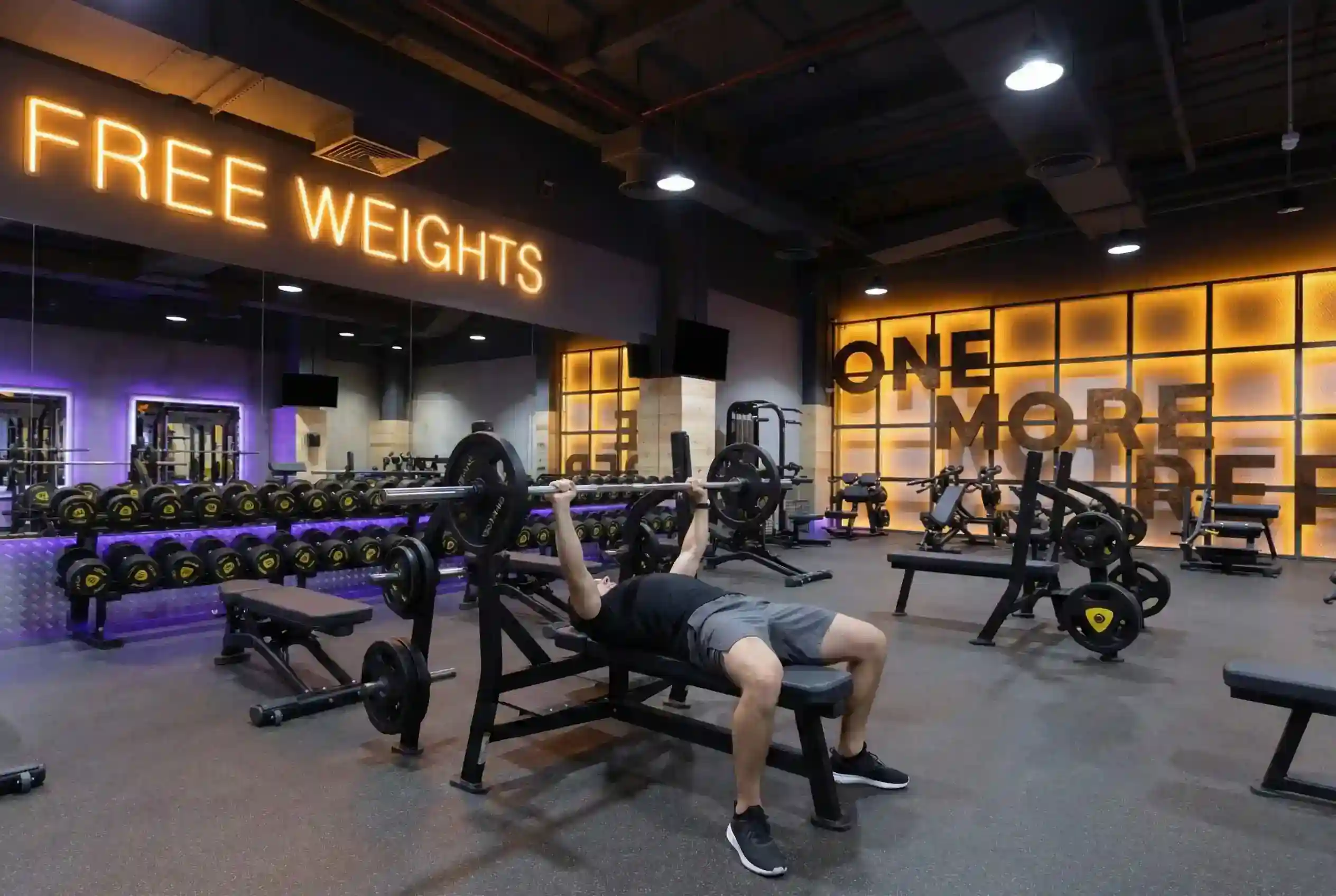
Set up the bench: Lie flat on the bench with eyes positioned under the barbell. Keep hips, shoulders, and head supported, maintaining a neutral neck position. Plant feet firmly on the floor for full-body stability.
-
Grip the bar: Take a grip slightly wider than shoulder width. Keep wrists straight, elbows stacked under the bar, and shoulder blades pinned to the bench. A neutral grip can be used for comfort or shoulder joint sensitivity.
-
Unrack the bar: Lift the barbell to the starting position directly over the mid-chest. Maintain tension through the upper body, shoulder blades locked, and core engaged.
-
Lower with control: Lower the barbell to the mid-chest under control. Keep elbows tucked slightly to protect the shoulders and maintain a solid bar path.
-
Press upward: Push the bar back up through the same line until the arms are straight (without aggressive lockout). Drive through the chest muscles and triceps, keeping wrists neutral and bar path consistent.
GymNation Tip: Before unracking, consider how much weight to use—select a load that allows you to perform the exercise safely and effectively, adjusting based on your strength and experience level.
Personal Trainer Notes:
-
Retract and pin shoulder blades tightly for chest activation
-
Never bounce the bar — lower with slow, controlled movement
-
Inhale on the descent, exhale during the press
-
Keep wrists straight and grip secure
-
Reduce the load when cleaning up technique and establishing proper form before adding more weight
GymNation Tip: Controlled tempo, full range of motion, stable shoulder blades, and a consistent press path maximise chest strength, muscle activation, and long-term performance. If you feel pain in the chest, elbows, or shoulders, adjust your grip, bench angle, or try incline press or dumbbell variations.
Variation for upper chest: Use an incline press with barbells, dumbbells, or machines to build the clavicular head and develop the upper chest muscles more directly.
Fix imbalances: One-arm bench work with dumbbells helps correct strength asymmetry, strengthens stabiliser muscles, and reinforces proper form under load.
Additional Training Benefits
Why the Barbell Bench Press is Essential
-
Builds upper-chest thickness and pressing power
-
Improves pressing mechanics for incline press, overhead press, and dumbbell bench press
-
Strengthens triceps brachii and anterior deltoids
-
Enhances shoulder stability and scapular positioning
-
Supports long-term strength training progression
-
Helps correct strength imbalances between left and right sides
-
Adapts to different strength levels, goals, and body types
Common Technical Mistakes
-
Bouncing the bar off the chest
-
Flaring elbows excessively
-
Raising hips off the bench
-
Using uneven or overly wide grip positions
-
Lowering the bar too quickly instead of maintaining control

 WHATSAPP
 EMAIL
EMAIL
 SHARE VIA
Alternative Chest Exercises

Barbell Decline Bench Press
The barbell decline bench press is a key bench press variation designed to emphasise the lower chest while still training the triceps brachii, anterior deltoids, and upper-body pressing muscles.

Barbell Incline Bench Press
The barbell incline bench press is one of the most effective bench press variations for building the upper chest, especially the clavicular head of the pectoralis major.

Cable Standing Fly
The cable standing fly is a highly effective chest exercise that isolates the chest muscles using constant tension from the cable machine.

Chest Dip
The chest dip is one of the most effective upper-body body-weight exercises for building the chest muscles,
Barbell Bench Press FAQs
It targets the chest muscles (including the clavicular head), triceps brachii, and anterior deltoids while strengthening the entire upper body and improving pressing motions used in push-ups, incline chest press, dumbbell press, and overhead pressing exercises while lifting .
-
Beginner: ~50–60 kg
-
Intermediate: ~80–90 kg
-
Advanced: 110 kg+
Strength level varies — focus on proper form, consistent progression, and a controlled range of motion.
Yes — ideal for learning bar path, grip positioning, breathing control, and safe technique before adding more weight.
A structured strength training programme that uses progressive overload through low reps to build bench press, squat, deadlift, and overhead press strength, focusing on increasing weight gradually .
Absolutely — it’s one of the best chest press lifts for upper-body muscle growth, shoulder stability, and long-term strength training performance, allowing you to effectively manage your weight .
No. Perform the bench press 1–2 times per week with rest and recovery to maximise strength, hypertrophy, and injury prevention while minimizing any potential strain .
-
Bouncing the bar
-
Excessive elbow flare
-
Lifting hips
-
Uneven grip
-
Rushing the lowering phase
-
Strength: 3–5 sets of 4–6
-
Hypertrophy: 3–4 sets of 8–12
Yes — focus on proper form, full shoulder blade retraction, neutral wrist alignment, and use a spotter for safety and confidence, especially when transitioning to dumbbell variations .